If you're repainting inside a Canberra, ACT home, the short answer is this: use matte or low-sheen on ceilings and living-area walls, satin where hands and scuffs are a problem, and semi-gloss on trims, doors and wet areas. Sheen controls how easily a wall wipes clean and how much light bounces off it. It also controls how much of your plaster's history shows through. This guide explains the trade-offs from a painter's point of view, so you can choose a finish for each room before the first coat goes on.
Key Takeaways
- Higher sheen wipes clean more easily but shows every patch, roller mark and plaster flaw, especially in bright Canberra light.
- Low-sheen suits most living areas and bedrooms; satin suits hallways, kids' rooms and kitchens; semi-gloss suits trims, doors and bathrooms.
- Washability depends on the paint product as well as the sheen, so check the manufacturer's data sheet rather than guessing from the gloss level.
- Preparation decides how any finish looks, and the glossier the paint, the more preparation it needs.
Interior paint finishes: which sheen suits which room?
Interior paint finishes sit on a scale from flat and matte at the dull end to high gloss at the shiny end. Most homes use three or four steps on that scale. Here is how we usually think about each room.
- Ceilings: matte. A flat surface hides joins and softens the light that rakes across the ceiling from windows.
- Living rooms and bedrooms: matte or low-sheen. These walls rarely get scrubbed, so softness and a forgiving surface matter more than scrub resistance.
- Hallways and stairwells: low-sheen or satin. Hands, shoulders and school bags rub on these walls every day.
- Kitchens: satin on walls, with semi-gloss where splashes and grease are heavy.
- Bathrooms and laundries: satin or semi-gloss, because steam and cleaning products are hard on softer finishes.
- Doors, skirting boards and architraves: semi-gloss or satin, so they can be wiped and stand apart from the walls.
These are starting points, not rules. A rental with young tenants may justify satin in a spot where an owner-occupier would choose low-sheen, and a feature wall may call for something different again. Our interior painting work usually begins with walking through each room and agreeing on the finish before anything is ordered.
How matte, low-sheen, satin and semi-gloss really differ
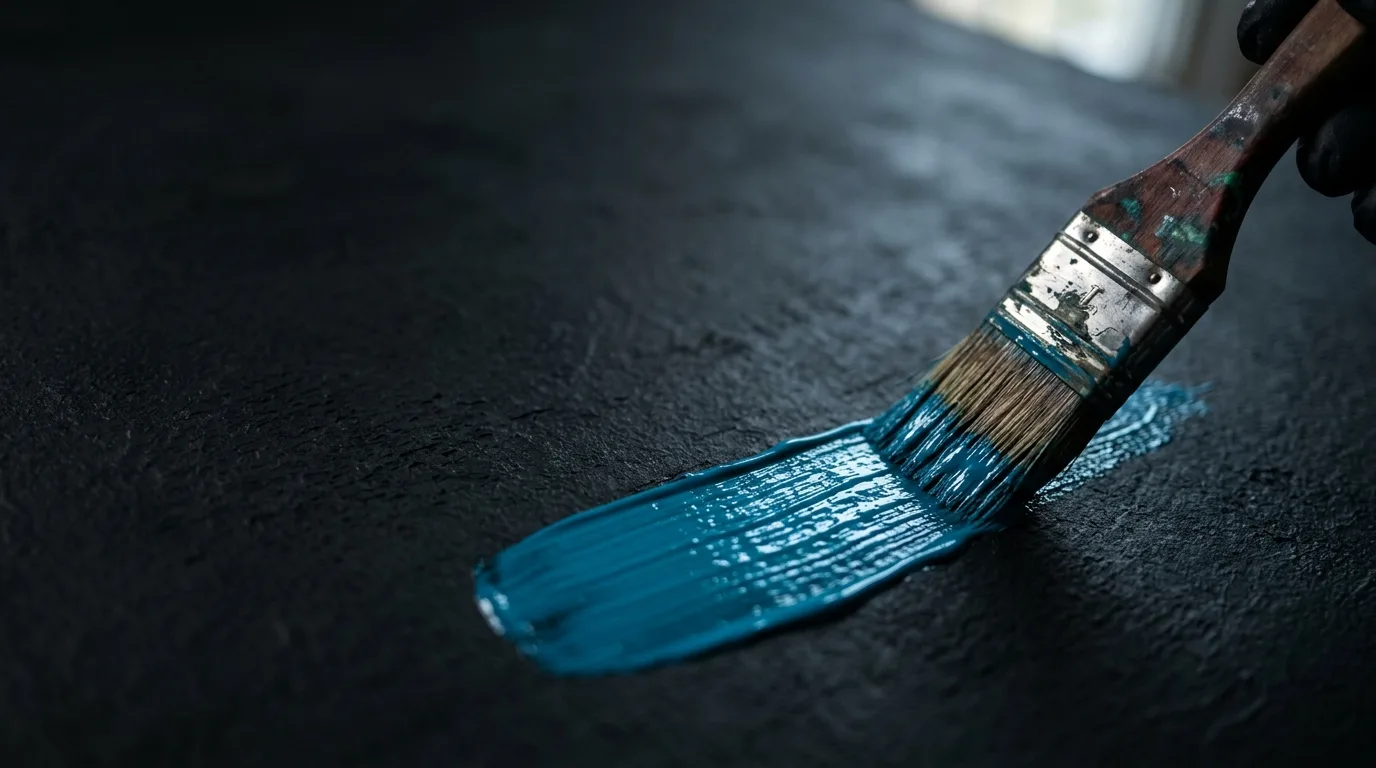
The difference between finishes comes down to how much light the dried paint reflects. More gloss resin in the paint means a tighter, smoother film that reflects more light and resists marking better. Less gloss means more microscopic texture on the surface, which scatters light and softens what the eye sees.
Matte is the most forgiving finish. It hides roller texture, light patching and minor wall movement. The cost of that softness is that it marks more readily and can burnish if you rub it. It is a sensible choice for ceilings and bedrooms where nobody touches the walls.
Low-sheen has a faint glow that is just enough to improve cleaning while still reading as a soft, calm wall. For many family homes it is the everyday finish for living areas and bedrooms, because it handles the occasional wipe without announcing every imperfection.
Satin is a visible step up in shine. It copes with fingerprints, food and scuffs, which is why it suits hallways, kids' rooms and kitchens. It also shows flaws more than low-sheen does, so the wall beneath has to be properly prepared.
Semi-gloss is hard-wearing and easy to wipe, which is why it is the usual choice for trims, doors, window frames and bathrooms. On a large wall, though, it can look hard and reflective, and every dent in the plaster becomes a small mirror.
The shinier the finish, the harder it works for you on cleaning and the harder your walls have to work on flatness.
Washability: what to look for beyond the sheen
People often search for which interior paint is washable, and the honest answer is that sheen is only part of it. A well-made low-sheen can outlast a cheaper satin when you scrub it. What matters is the product's scrub resistance and stain resistance, which manufacturers describe on their technical data sheets. We would rather you read those than take our word or a shop assistant's off-hand comment.
A few practical points help in everyday life:
- Give the paint time to cure. A wall can feel dry within hours but still be soft for days or weeks. Washing too early can burnish or lift the film.
- Clean gently. A soft cloth and mild soapy water do the job on most walls. Abrasive pads and strong chemicals can dull or damage even a hard-wearing finish.
- Match washability to the real risk. A hallway that gets scuffed weekly deserves a tougher product than a guest bedroom.
- Keep a labelled tin. Touching up a satin wall with a different batch or sheen can leave a patch that shows up when the light changes.
Why Canberra light is hard on glossy walls
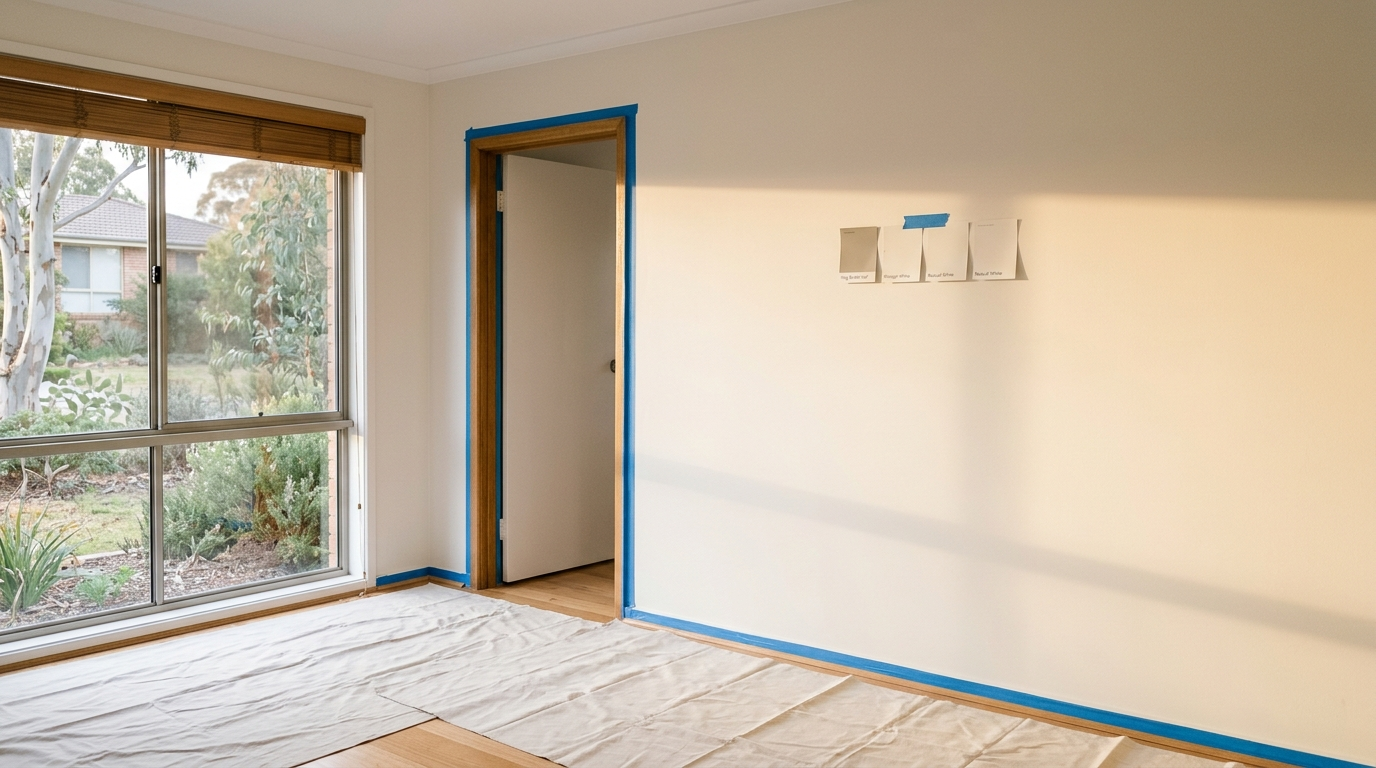
Canberra has clear skies, strong UV and low winter sun that streams in sideways through windows and glass doors. That kind of light is called raking light, and it is the enemy of a high-sheen wall. Light skimming across the surface picks out every ridge, trowel mark, filled crack and slightly proud screw head, which in matte paint would have disappeared.
That is why we often steer owners away from satin or semi-gloss on large, sunlit walls such as living rooms with big windows, long hallways that catch the morning sun, or stairwells with a skylight. A low-sheen finish on the same wall usually looks calmer and more even. Where you want the wipe-clean benefit on a bright wall, the wall needs more preparation, which we cover below.
Colour matters here too. Dark colours in higher sheens show marks and dust more plainly, and pale colours can look different at different times of day. We recommend painting a sample on the actual wall and looking at it in the morning, at midday and at night before committing.
Talk to a Canberra painter about your finishes
If you're not sure which sheen belongs in which room, it helps to have someone look at the walls in person. We'll talk through your light, your plaster and how each room is used.
Preparation decides how the finish looks
Paint does not hide a poor surface; it displays it. The glossier the finish, the more honest it is about what lies underneath. That is why surface preparation is often more important than the paint you buy, and why our repairs and preparation work is a distinct part of the job rather than an afterthought.
Good preparation for interior paint finishes typically includes:
- Repairing cracks and holes so that fillers are sanded flush with the surrounding wall.
- Sanding the wall to remove ridges and rough patches, and to give new paint something to grip.
- Cleaning grease, dust and residue so the paint bonds properly.
- Priming or sealing patches, bare plaster and stained areas so they do not flash through the topcoat as dull or shiny spots.
- Treating water-damaged or mould-affected surfaces before painting. If the cause of the damp has not been fixed, no finish will hold.
Flashing is a common surprise. A patch of filler absorbs paint differently from the old wall around it, so in satin it can look like a dull or glossy smudge even after two coats. Sealing the repair first is what prevents it. In older houses, check what you are dealing with before sanding: paint from earlier decades can contain lead, and that needs proper care and assessment rather than a quick rub-back.
Finishes for rentals, strata and commercial spaces
Landlords and property managers usually care about two things: how the paint holds up between tenants, and how easily it can be touched up. A low-sheen or satin finish in a neutral colour is a practical middle ground, because it tolerates cleaning without looking glossy, and it is easier to maintain than a flat paint that marks when wiped.
Strata common areas and commercial properties are a different situation again. Corridors, lobbies and stairwells take heavy contact, so tougher, more cleanable finishes make sense on the surfaces people touch most, while ceilings and upper walls can stay matte. Consistency matters as well; a building looks maintained when the same sheen and colour continue through each level. We handle this kind of work through our strata and commercial painting service, and the finish schedule is worth settling with the owners corporation or business owner before work begins.
White paint, brands and cost: the questions we hear most
Many people searching for interior paint ask which white to use, which brand to buy and which product is cheapest. We can't give you a universal answer, and we would be wary of anyone who does.
Which white? There is no single correct white. Whites carry warm, cool or neutral undertones, and the same white can look creamy in a north-facing room and cold in a south-facing one. Test samples in each room, on the wall, in different light.
Which brand? Reputable Australian manufacturers publish technical data on their ranges, and what matters is matching the product's stated performance to the room. We would rather compare data sheets with you than recommend a name without seeing the job.
What will it cost? Painting a room is driven by the size of the space, the condition of the walls, how much preparation is needed, the number of coats, the colour change, and how much has to be moved or masked. Paint choice is one part of that. Our painting cost guide explains these factors in more detail, and a free quote gives you current figures for your own rooms.
Frequently Asked Questions
What is the most practical sheen for a whole-house repaint?
For many homes, matte on ceilings, low-sheen on living and bedroom walls, satin in hallways and kitchens, and semi-gloss on trims and doors make a workable combination. Your light, lifestyle and wall condition may shift individual rooms up or down.
Is satin always more washable than low-sheen?
Not necessarily. Satin generally resists marking better, but the quality of the specific product matters as much as the sheen. Check the manufacturer's data sheet for scrub and stain resistance.
Why do my walls look patchy after painting?
Patchiness usually comes from uneven preparation, such as unsealed filler, or from raking light catching roller marks. Higher sheens make both more obvious. Sealing repairs and keeping a wet edge while rolling both help.
Can I use semi-gloss on all my walls so they are easy to clean?
You can, but we rarely recommend it. Semi-gloss reflects so much light that any imperfection in the plaster is highlighted, and large glossy walls can look harsh. Satin or low-sheen is usually the better compromise.
How long should I wait before washing new paint?
Follow the manufacturer's guidance for the product used. Paint can feel dry well before it has fully cured, and cleaning too soon can mark or damage the surface.
Do bathrooms need a special finish?
Bathrooms and laundries are exposed to steam and cleaning products, so satin or semi-gloss products designed for those conditions are common choices. Good ventilation and properly prepared surfaces matter just as much as the paint.
Choosing a finish you will still be happy with
Choosing the right sheen is about balancing two things: how easily a surface cleans and how honestly it shows the wall beneath. Soft finishes forgive plaster and hide light; harder finishes protect against scuffs and splashes but demand a flatter, better-prepared surface. Match each room to the way it is used, and the choice usually becomes straightforward.
Canberra's bright, low-angled light makes preparation more important than many owners expect. Time spent on filling, sanding and sealing is what lets a satin hallway or a semi-gloss door look clean and even, rather than showing every repair.
If you would like a second opinion on a specific room, we are happy to look at it with you and talk through the options.
Get a free quote for your interior repaint
Capital Painting & Decoration Services (licence 474930C) paints homes, townhouses, apartments, strata buildings and commercial properties across Canberra, ACT.